Understanding Video EXIF Data and Why You Should Erase It
Executive Summary
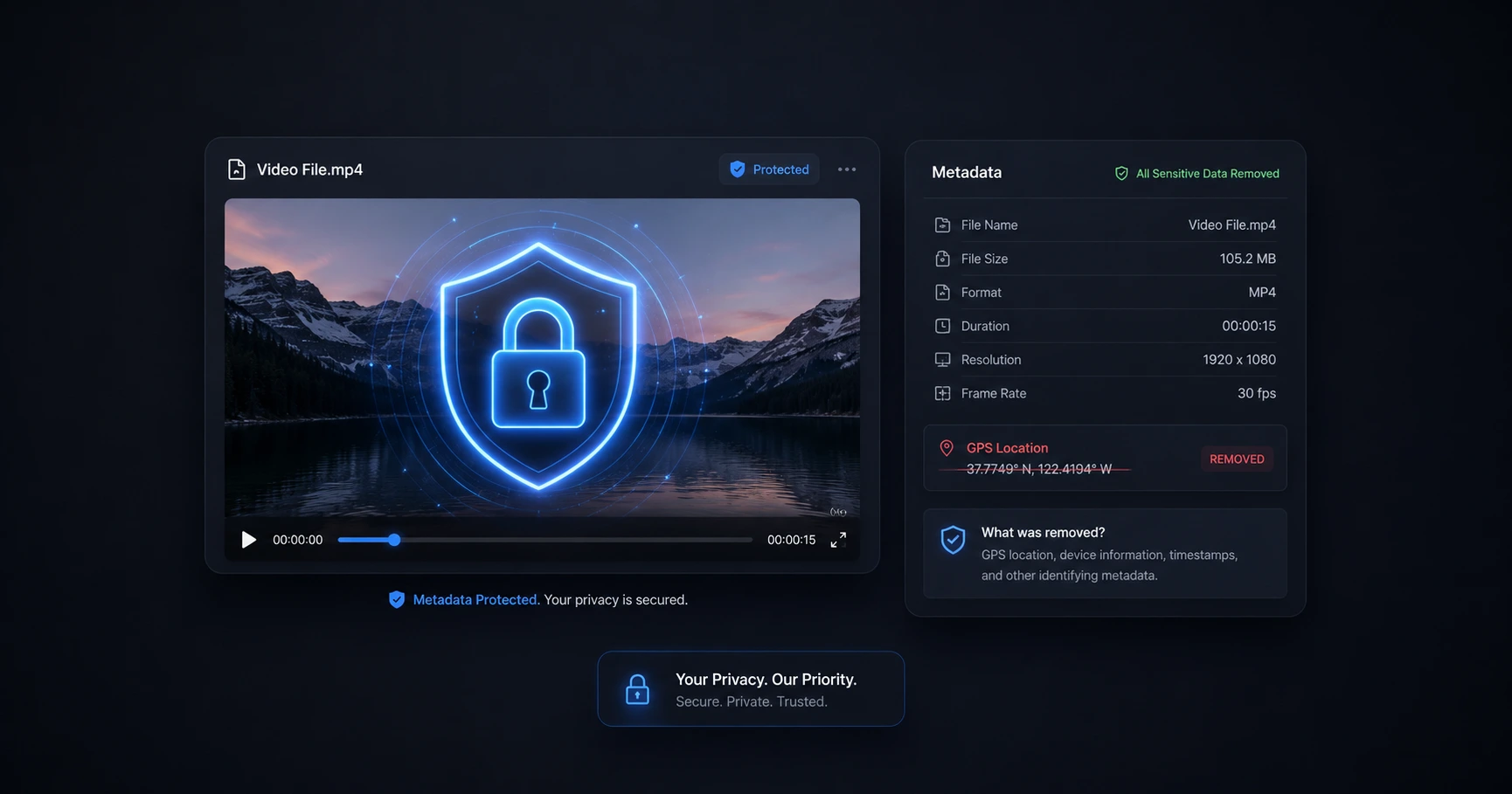
Modern video files silently record hidden tracking information, including your exact physical location and device details. Routinely clearing this metadata locally on your device before publishing is a necessary best practice for maintaining a secure digital footprint without relying on third-party cloud tools.
What is Hidden in Your Video Files?
When you record a video, your camera saves much more than just visuals and sound. It packages the file with an invisible layer of tracking data known as EXIF metadata. Originally designed to help photographers organize massive catalogs of media, this metadata has become a standard feature in modern smartphones and digital cameras.
Without any prompt or warning, your device writes highly specific details into the video file's container. This includes the exact time and date the recording started, the specific model and serial number of the camera used, and most importantly, the precise GPS coordinates—latitude and longitude—of where you were standing when you hit record.
The Danger of a Digital Footprint
While this data is helpful for personal organization, it creates a massive security vulnerability when those files are shared. Uploading raw clips to client portals, sharing unedited reviews in public forums, or distributing behind-the-scenes footage often leaves this metadata perfectly intact.
Anyone who downloads the raw file can right-click, inspect the properties, and view your exact physical location history. For professional creators who frequently film in their homes or private studios, inadvertently sharing unscrubbed media can lead to accidental doxing, stalking, or exposing sensitive operational locations to the public.
Scrubbing Data at the Source
To protect your personal privacy, this tracking data must be routinely and permanently erased. However, uploading your private videos to a remote "metadata cleaner" website completely defeats the purpose of securing your information. You should never hand over files containing your home address to an unknown third-party server.
The only secure method is to utilize an on-device formatting toolkit. By loading your video into a dedicated browser-based metadata editor, your computer's own processing power handles the task locally. You can instantly view the hidden tracking data and strip it entirely from the file. Because the video never crosses an internet connection, your digital footprint is securely erased with absolutely zero risk of exposure.
Explore the Creator Privacy & Security Cluster
The Ultimate Guide to Creator Privacy and Video Security
Every video you shoot contains hidden tracking data, and every file you upload to a third-party server becomes vulnerable to theft or leaks.

Format your videos instantly
Prep and standardize your clips before they hit the editing timeline. Reframe, crop, split, and compress your footage directly in your browser with absolute privacy and zero watermarks.
Related Questions
What kind of metadata is saved in a video file?
Modern video files often contain hidden EXIF data, which silently records precise GPS coordinates, timestamps, and device details like your camera model.
Why is it important to delete EXIF data before uploading?
Deleting EXIF data prevents platforms and individuals from accessing your private location history. Using a dedicated on-device utility to erase this data ensures your footage remains entirely under your control and protects your digital footprint.